Introduction
As online education continues to grow, universities and institutions are increasingly relying on AI-powered proctoring to ensure academic integrity. However, this technological shift raises a critical question: How do we balance security with student privacy while ensuring compliance with regulations like GDPR?
AI-driven online exam proctoring can effectively detect and prevent cheating through real-time monitoring, facial recognition, and keystroke tracking. Yet, concerns about data security, student rights, and ethical AI use cannot be ignored. This guide explores the best practices for implementing AI-powered proctoring while safeguarding student privacy in 2025.
The Rise of AI in Online Exam Proctoring
AI-powered proctoring solutions have become the backbone of secure online assessments. These tools use machine learning algorithms to monitor students during exams, flagging suspicious behavior such as unusual eye movements, multiple screen usage, or external assistance. While this helps maintain a fair testing environment, institutions must address the ethical implications of tracking students so closely.
Benefits of AI-Based Proctoring
- Enhanced Security – Detects and prevents cheating in real-time.
- Scalability – Enables institutions to monitor thousands of students at once, reducing the need for human invigilators.
- Automated LMS Certification System – Streamlines grading and automatically issues certificates upon exam completion.
- Data-Driven Insights – Provides detailed reports on student performance and test integrity.
However, these advantages must be weighed against student privacy concerns. Many learners feel uneasy about being monitored through webcams and keystroke analysis. Institutions need a thoughtful approach to balance security with transparency and fairness.
How to Implement a Cheat-Proof Online Exam Setup
A well-designed AI proctoring system should not only prevent cheating but also respect student privacy. Here’s how to set up a secure, ethical, and GDPR-compliant online exam environment.
Step 1: Choose the Right AI Proctoring Tool
Selecting the right AI-powered solution is crucial. Look for tools that offer:
- Live and Automated Proctoring – Some platforms allow real-time monitoring with human intervention when needed, while others use AI to analyze recordings post-exam.
- Browser Lockdown – Prevents students from opening new tabs or switching screens.
- Biometric Authentication – Ensures the right student is taking the exam.
- Privacy Controls – Allows institutions to configure data collection and storage settings in compliance with legal requirements.
Step 2: Ensure GDPR Compliance in AI Proctoring
With data privacy laws evolving, universities must ensure that their online exam proctoring methods align with GDPR guidelines. Here’s how:
- Obtain Explicit Consent – Before an exam, clearly inform students about what data will be collected, how it will be used, and their rights.
- Data Encryption & Storage Limits – Encrypt all recorded exam data and set strict retention policies to delete unnecessary information.
- Transparency & Student Rights – Allow students to request access to their recorded data and appeal flagged incidents.
Step 3: Integrate an Automated LMS Certification System
AI proctoring becomes even more powerful when integrated with an institution’s LMS (Learning Management System). This automation ensures that:
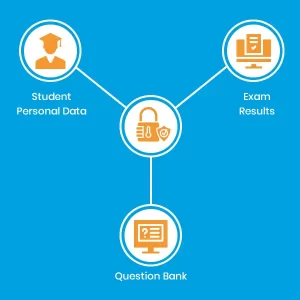
- Exam results are instantly processed, reducing administrative workload.
- Certifications are issued automatically upon successful completion.
- Performance analytics help educators tailor future coursework based on student outcomes.
Addressing Student Privacy Concerns
While AI proctoring improves exam security, students often feel uncomfortable being closely monitored. Institutions can foster trust by:
- Providing Clear Privacy Policies – Make it easy for students to understand how their data is used and stored.
- Using AI Responsibly – Avoid excessive tracking and only collect essential data.
- Offering Alternative Assessment Options – Some students may have legitimate reasons to opt out of AI proctoring, such as disabilities or internet connectivity issues.
Case Study: AI Proctoring Success
The Challenge
A major European university faced rising concerns over online exam integrity after shifting to remote learning. They needed a solution that ensured security while maintaining GDPR compliance and student trust.
The Solution
By implementing AI-powered proctoring with a transparent privacy policy, they achieved:
- 60% Reduction in Academic Dishonesty – Advanced AI detection reduced instances of cheating significantly.
- Faster Exam Grading – Automated LMS certification streamlined grading, cutting down processing time by 50%.
- 98% Student Compliance Rate – Clear communication about GDPR-friendly policies led to widespread student acceptance.

Conclusion
AI-powered proctoring is a game-changer for online education, offering unmatched security and efficiency. However, institutions must be proactive in addressing student privacy concerns and ensuring compliance with regulations like GDPR. A well-balanced approach—integrating ethical AI use, clear privacy policies, and automated LMS certification—can create a seamless, secure, and fair exam environment.
Call to Action
Are you looking for a secure and GDPR-compliant online exam proctoring solution? Contact us today for expert guidance on AI-powered proctoring and LMS integrations to enhance your institution’s online assessment process!