
The landscape of higher education in the United States has been irrevocably transformed. Online learning is no longer a peripheral option but a core component of institutional strategy. However, this rapid expansion has revealed a critical challenge: The Engagement Paradox.
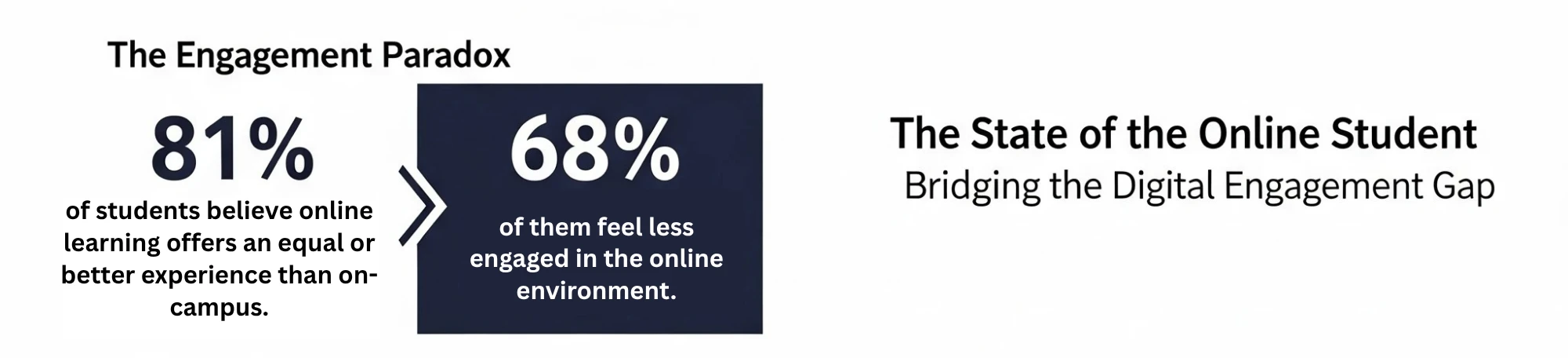
While a recent BestColleges report shows 81% of students feel their online education is as good as or better than on-campus learning in terms of value, a staggering 68% feel less engaged in the online environment.
This gap between perceived value and actual engagement is where institutions risk losing students, reputation, and revenue. The question is no longer if you should offer online programs, but how you can make them experiences that captivate, motivate, and retain learners. This guide provides a strategic framework and quick wins for enhancing online learning at your institution.
The Sobering Reality: Key Statistics on Online Student Engagement
Before diving into solutions, it’s crucial to understand the specific pain points students are experiencing. Current data paints a clear picture:
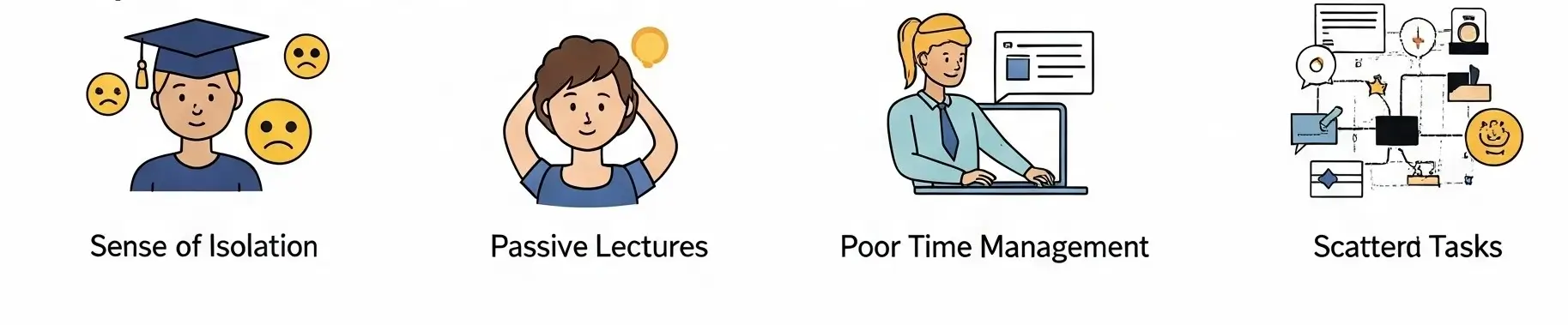
- A Crisis of Connection: 45% of students directly miss real-time interaction with their peers and instructors, leading to a profound sense of academic and social isolation.
- The Challenge of Passive Learning: A significant 44% of learners find standard online lectures boring and unable to hold their attention, resulting in “Zoom fatigue” and diminished knowledge retention.
- The Flexibility Double-Edge: While students crave flexibility, 75% struggle with procrastination and time management in less-structured online settings.
These are not minor issues; they are the primary drivers of student dissatisfaction and attrition in online programs.
Beyond the Basics: 4 Pillars for Enhancing Online Learning
To truly improve the virtual classroom, institutions must move beyond simply digitizing lectures. The goal is to build a dynamic, supportive, and interactive digital campus. Here are four pillars to guide your strategy.
Barriers to Student Success
Pillar 1: From Isolation to Community
The most successful online programs are those that intentionally foster a sense of belonging. An isolated learner is an at-risk learner.
Quick Wins for Building Community:
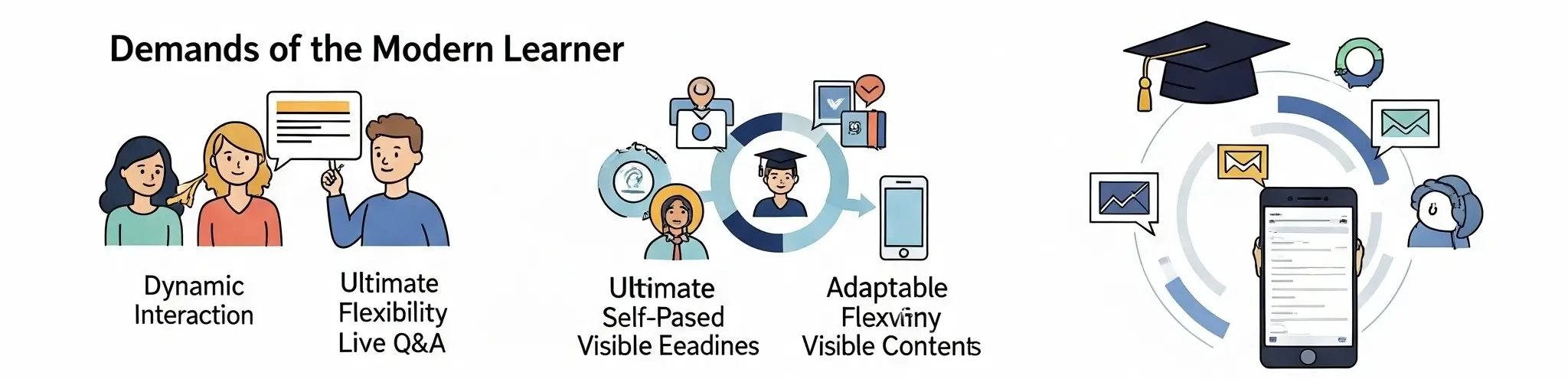
- Structured Discussion Forums: Go beyond open-ended questions. Create weekly, prompted discussions that require students to respond to each other’s posts, facilitating peer-to-peer learning.
- Virtual Study Groups: Actively encourage and facilitate the formation of small, student-led study groups. Provide them with virtual breakout rooms or channels in your LMS to collaborate.
- Informal “Office Hours”: Host non-mandatory, live Q&A sessions where students can drop in to chat with instructors and TAs in a low-pressure environment.
Pillar 2: From Passive to Active Learning
The human brain learns best by doing, not by passively watching. Transforming lectures into active learning sessions is the single most effective way to boost engagement.
Quick Wins for Active Learning:
- In-Lecture Interactivity: Integrate live polls, quizzes, and “raise hand” features directly into your lectures to keep students focused and provide real-time feedback.
- Gamify the Experience: Introduce elements like points, badges, and leaderboards for completing modules or participating in activities. This taps into intrinsic motivation and makes learning more enjoyable.
- Break Down Content (Microlearning): Replace 60-minute video lectures with several 7-10 minute videos, each focused on a single concept and followed by a brief knowledge-check quiz.
Pillar 3: From Rigidity to Intelligent Flexibility
Students choose online learning for its flexibility, but they still need structure to succeed. The key is to provide a framework that empowers rather than restricts.
Quick Wins for Flexibility:
- Mobile-First Design: With over 80% of students using their smartphones for academic work, ensuring your LMS and course materials are perfectly optimized for mobile is non-negotiable.
- Self-Paced Modules: Design courses in weekly or bi-weekly modules with all materials available upfront. This allows students to work ahead if they can, while clear deadlines prevent them from falling behind.
- Diverse Content Formats: Cater to different learning styles by offering content in various formats—video, audio (podcasts), interactive simulations, and text.
Pillar 4: Leveraging the Right EdTech Stack
Your technology should be an invisible enabler of learning, not a barrier. A streamlined, powerful, and user-friendly tech stack is the foundation of a successful online program.
Key Considerations for Your EdTech Stack:
- LMS Optimization: Is your Learning Management System (like Moodle, Canvas, or Blackboard) being used to its full potential? Often, these platforms have powerful but underutilized features for engagement.
- Seamless Integrations: Ensure that any third-party tools (like Articulate for simulations or interactive video platforms) are seamlessly integrated into your LMS to provide a single, cohesive user experience.
- Proactive Technical Support: Minimize student frustration by offering robust, easily accessible technical support to quickly resolve issues with logins, software, or connectivity.
The Institutional ROI of Enhancing Online Learning
Focusing on student engagement isn’t just about student satisfaction; it’s a critical business strategy. Institutions that master the art of online engagement see a direct, positive impact on:
- Higher Student Retention Rates: Engaged students are far more likely to complete their courses and programs.
- Improved Institutional Reputation: Word-of-mouth and positive reviews from successful online alumni are powerful marketing tools.
- Increased Enrollment: High-quality, engaging online programs attract a wider pool of top-tier domestic and international students.

The future of higher education is not just online; it’s engaged online. By moving from a passive content delivery model to one of active community building, your institution can not only solve the engagement crisis but also set a new standard for excellence in digital learning.